Cold Weather Packing List for Vacations: Printable Checklist
Key Takeaways
- A cold weather packing list starts with moisture-wicking base layers, a fleece mid-layer, a weatherproof shell, insulated boots rated to -40 or lower, and warm accessories like mittens and wool socks.
- Traction gear such as microspikes and gaiters becomes useful for icy sidewalks, packed snow, and slushy trails, while trekking poles add balance on longer winter walks.
- Sunscreen, sunglasses, and SPF lip balm belong on winter trips because snow glare and higher elevations increase sun exposure even in cold weather.
- Travel insurance with Emergency Assistance and Transportation coverage may be worth considering for cold-weather trips to remote destinations where weather delays and medical access are concerns.
This cold weather packing list is for travelers planning anything from a city break to remote adventures in cool-weather destinations, from Alaska to Antarctica. It covers what to pack for a winter trip, including layers, footwear, safety gear, and trip-specific extras. A printable winter travel packing list is included below so you can check items off before you go.
Also read: Winter Travel Insurance - How it can Help When Trips Get Rough
Cold Weather Vacation Packing Checklist
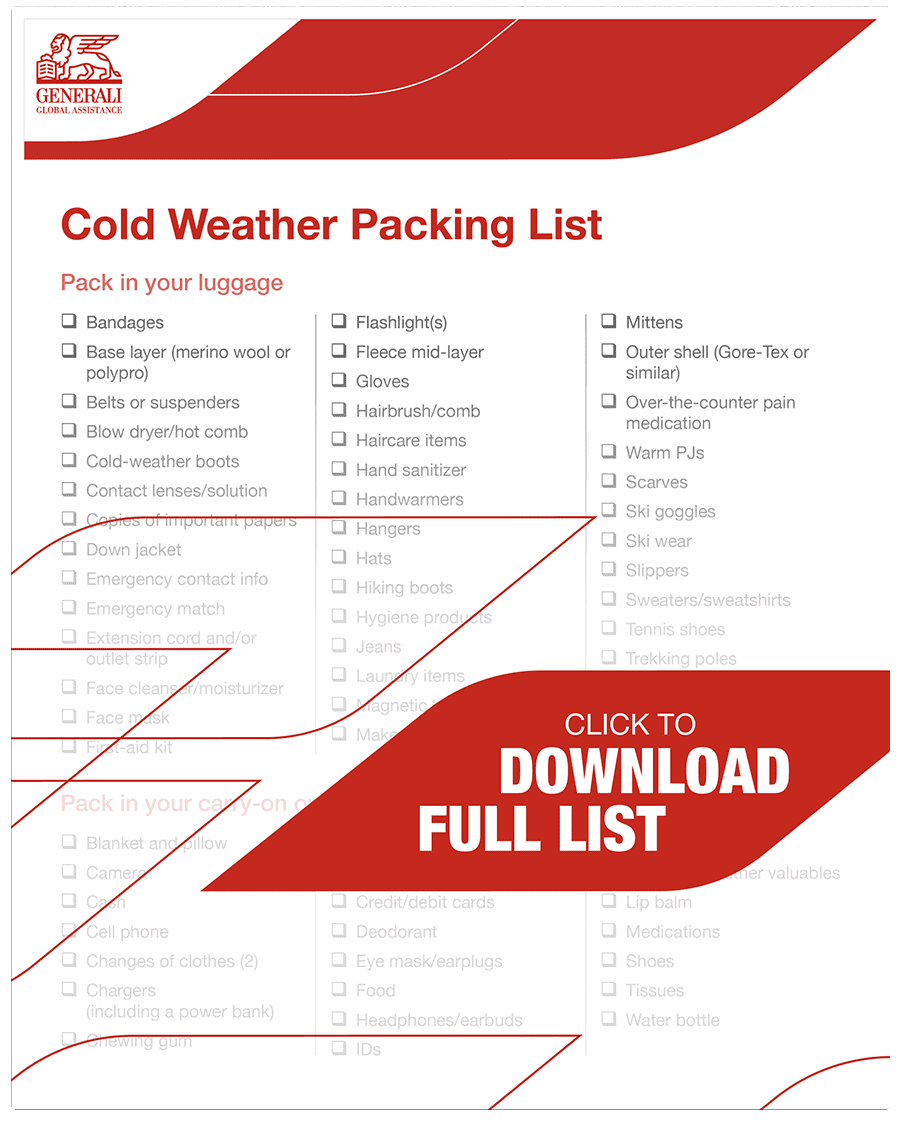
You can download our printable cold weather packing checklist by clicking the button below. This winter vacation packing list is a simple way to review what to pack for a winter trip, and the accessible interactive PDF can be digitally checked off using any device or easily printed for your use.
Layering Basics for Cold Weather
Every bit of cold-weather clothing advice starts with “wear layers,” and they’re right — to a point. You do want to pack and wear layers, but they have to be the right kind of layers.
The key is to keep moisture away from your body. Moisture cooling on your skin makes you feel colder. It’s not the only way to feel cold — simply not dressing warm enough will also do the trick — but if you’re active and generating heat and suddenly stop being active, clammy skin will quickly turn to chilly skin.
- Base layer: Choose a polypro or merino-wool base layer that wicks away moisture from your skin. For your lower body, pack moisture-wicking long underwear instead of relying on jeans alone.
- Mid-layer: Add a fleece mid-layer to hold warmth without trapping moisture.
- Shell: Cover your layers with a Gore-Tex shell or similar outer layer for active outdoor pursuits, and pack weatherproof pants when snow, slush, or wind is part of the forecast.
- Optional insulated outerwear: If you look at what people wear who live and work in cold climates, you’ll often find it’s insulated coveralls or snowmobile suits. These garments hold in heat over your entire body, keeping vulnerable areas like your upper thighs nice and toasty. Layer bibs with an appropriate jacket, and you’re set.
Finally, remember that you can always shed a layer, but it’s hard to add a layer you don’t have.
What Not to Pack: Avoid cotton base layers, tight boots that reduce circulation, and skipping traction gear in icy conditions.
Also read: Packing For a Ski Vacation: Strategies and a Packing Checklist
How to Keep Hands and Feet Warm
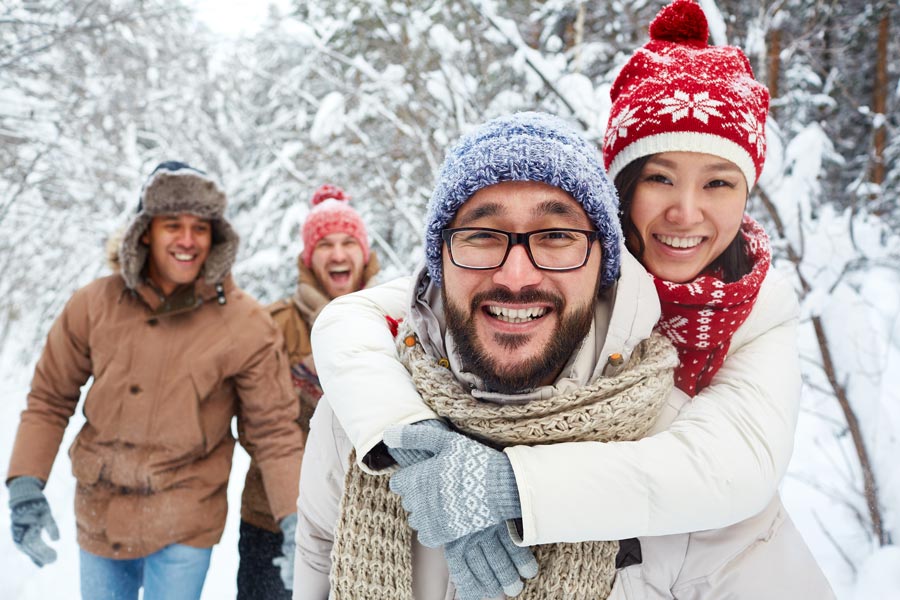
Hands and feet are the hardest body parts to keep warm and the parts most vulnerable to frostbite.
The keys to keeping your feet warm are:
- Moisture-wicking socks
- High-quality insulated boots
- No tight boots or shoes
Cold-weather socks of alpaca or merino wool are perfect. Warm, dry socks of the same materials are a luxury at the end of a cold day outside.
As for boots, you get what you pay for. Choose insulated, waterproof outdoor footwear appropriate for your destination's temperatures.Don’t worry about how clumsy your feet may feel in these boots; their warmth is your payoff. (Ultra-clunky “pac” boots are recommended if you’re going to be standing or sitting in the cold — at a northern-tier outdoor football game in January, for instance.)
When it comes to your hands, the more fingers you can keep together, the warmer they’ll be.
Opt for mittens with a wind-blocking outer layer, like leather-and-wool “choppers.” If you need some fingers, try a “lobster-claw” gloves.
With all gloves or mittens, make sure they wick moisture away from your skin. Wet fingers quickly become cold fingers.
Handwarmers are a reliable backup for long stretches outdoors.
Also read: 6 Romantic Winter Getaways
Cold-Weather Gear for Ice, Snow, and Slippery Terrain
If your trip includes icy sidewalks, packed snow, trail walking, or snowshoeing, traction gear may be worth packing.
Trekking poles can add balance on snowy trails and reduce fatigue on longer walks. Gaiters help keep snow and slush out of your boots, especially in deeper snow or wet trail conditions. Microspikes can improve traction on icy sidewalks, packed trails, and other slippery surfaces where regular boot soles may not be enough.
What to Pack for Extreme Cold and Wind Chill
The best advice in conditions of extremely low air temperatures and/or wind chills is to stay indoors. If you can’t, try to cover all exposed skin with a scarf, neck gaiter, or face mask, and wear goggles to protect your eyes.
Exposed skin can develop frostbite in less than 10 minutes in extreme conditions, according to the National Weather Service.
Pack sunglasses, sunscreen, and SPF lip balm because snow glare and higher elevations can increase sun exposure, even in winter.
For more guidance on severe conditions, see our winter travel safety tips and this Arctic travel guide.
Also Check out Our AI Travel Packing Assistant
Cold Weather Travel Extras
If snowshoeing is on your itinerary, consider packing some Nordic-specific trekking poles. They’ll lessen your workload considerably.
Even if you’re just taking a few loops on some popular trails, take along a first-aid kit, extra handwarmers, Swiss Army knife or multi-tool, and some emergency matches.
Similarly, pack a swimsuit, because you never know when or where you’ll encounter a sauna or jacuzzi.
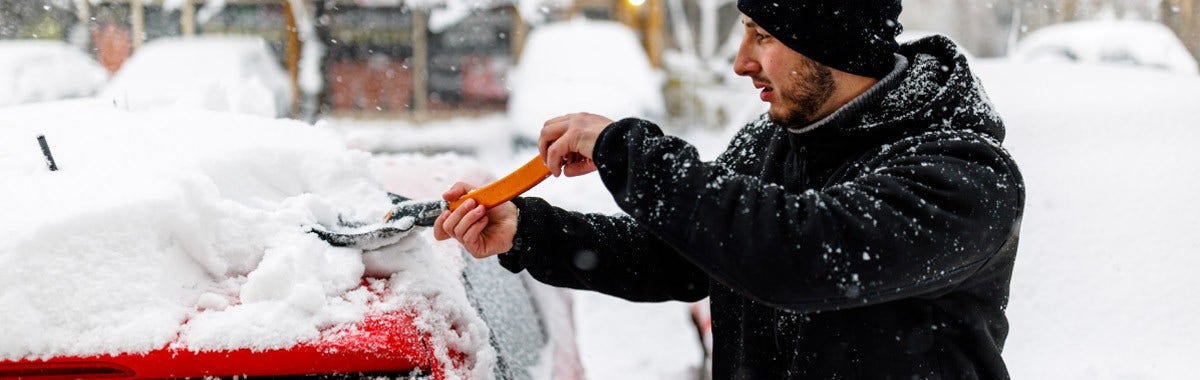
Winter driving requires its own preparation. We won’t get into details other than to mention the Canadian government has some great tips on what to pack and how to prepare.
Also read: 6 Winter Activities for Non-Skiers and Where to Try Them
Pack by Trip Type: City Trips, Ski Trips, and Winter Road Trips
Some items move from optional to essential depending on where you’re going and how you’ll spend your time.
Trip type | Pack these extras | Usually optional |
City trips | insulated boots, warm gloves, a scarf or neck gaiter, sunglasses, and handwarmers | ski goggles, trekking poles, and a swimsuit |
Ski trips | ski wear, ski goggles, extra warm socks, handwarmers, and weatherproof pants | blow dryer/hot comb, slippers, and a swimsuit |
Winter road trips | blanket and pillow, food, water bottle, flashlight, extra clothes, and emergency supplies | ski goggles, trekking poles, and gaiters |
Why Travel Insurance Matters for Winter
If you’re heading somewhere cold and remote, travel protection may be worth considering. Choose a plan with coverage for Emergency Evacuation if that matches your trip, and remember that coverage is subject to terms, conditions, and exclusions.
Our plans are designed to help protect cold-weather trips. If winter weather, remote travel, or expensive gear is part of your trip, get a quote to review your options.
Printable Cold Weather Packing Checklist
Use this winter travel checklist as you pack. Essential items should go first, and scenario-based items such as trekking poles, ski goggles, slippers, a swimsuit, and a blow dryer or hot comb depend on your destination, activities, and lodging.
Pack in Your Luggage
Clothing
- base layer (merino wool or polypro)
- jeans (preferably flannel-lined)
- ski wear
- sweaters/sweatshirts
- swimsuit (optional)
- undergarments
- warm PJs
- warm socks (alpaca or merino wool, several pairs)
- weatherproof pants
- wool or flannel shirts
Outerwear
- down jacket
- face mask
- fleece mid-layer
- hats (lined beanie, peaked ski hat and/or lumberjack-style with earflaps)
- outer shell (Gore-Tex or similar)
- scarves
Footwear
- cold-weather boots
- gaiters
- hiking boots
- microspikes
- slippers (optional)
- tennis shoes
Accessories
- belts or suspenders
- gloves
- hangers
- handwarmers
- magnetic hooks
- mittens (with a wind-blocking outer layer)
- ski goggles (optional)
- trekking poles (optional)
Toiletries
- blow dryer/hot comb (optional)
- contact lenses/solution
- face cleanser/moisturizer
- hairbrush/comb
- haircare items
- hand sanitizer
- hygiene products
- laundry items
- makeup/makeup remover
- over-the-counter pain medication
- sunscreen
Safety
- bandages
- emergency matches
- emergency contact info (family, friends, banks, credit-card companies)
- first-aid kit
Documents
- copies of important papers
Electronics
- extension cord and/or outlet strip
- flashlight(s)

Pack in Your Carry-On or Backpack
Clothing and Comfort
- blanket and pillow
- change of clothes
- eye mask/earplugs
- shoes
Toiletries and Health
- deodorant
- lip balm with SPF
- medications
- tissues
Electronics
- camera
- cellphone
- chargers (including a power bank)
- computer or tablet
- headphones/earbuds
Documents and Valuables
- cash
- copies of prescriptions
- credit/debit cards
- IDs
- insurance cards
- jewelry and other valuables
Food and Basics
- chewing gum
- food
- sunglasses
- water bottle
Frequently Asked Questions
What should be on a cold weather packing list?
A cold weather packing list should cover layers, outerwear, insulated footwear, warm accessories, toiletries, safety basics, documents, and electronics. Start with moisture-wicking base layers, a warm mid-layer, a shell, and cold-weather boots, then add trip-specific gear such as ski wear, gaiters, or microspikes.
Do I need hand warmers and foot warmers?
Not always, but they may be useful for long stretches outdoors, very low temperatures, or trips where you’ll be standing still. They’re a backup, not a substitute for dry socks, insulated boots, and warm gloves or mittens.
Are gaiters or microspikes necessary?
They depend on the conditions. Gaiters are most useful in deeper snow or slushy trails, while micro spikes may help on icy sidewalks, packed snow, and slippery paths.
Should I pack sunscreen in winter?
Yes. Snow glare and higher elevations can increase sun exposure, so sunscreen, sunglasses, and SPF lip balm are worth packing for many winter trips.
What goes in a cold-weather carry-on?
Your cold-weather carry-on should include medications, documents, valuables, chargers, a change of clothes, and a few comfort items. For winter delays, it also helps to keep food, water, lip balm, and a blanket or pillow within reach.
Once your cold weather packing list is ready, you can also get a quote to review travel protection options for your trip.

B007212403, 1106002607

Average Customer Rating:

Thank you for visiting csatravelprotection.com