
10201502602
Free Things to do in Rome: Museums, Parks, Walking Tours and More
Key Takeaways
- Explore low-cost ways to experience Rome, from walking tours and hidden churches to parks and museums.
- Discover lesser-known gems such as Basilica di Santa Prassede, Quartiere Coppedè, and the Museo Storico della Liberazione.
- Understand how a travel protection plan may help with unexpected issues abroad, such as medical needs, language barriers, or lost documents.
Whether you're looking forward to seeing the Colosseum or St. Peter’s Basilica, there are likely a number of destinations on your Roman-must-see list. With so many attractions, the cost of sightseeing can add up, so it makes sense to include some lesser known gems that are easier on the wallet.
To get you started, here are our top five free things to do in Rome:
Free Walking Tours in Rome
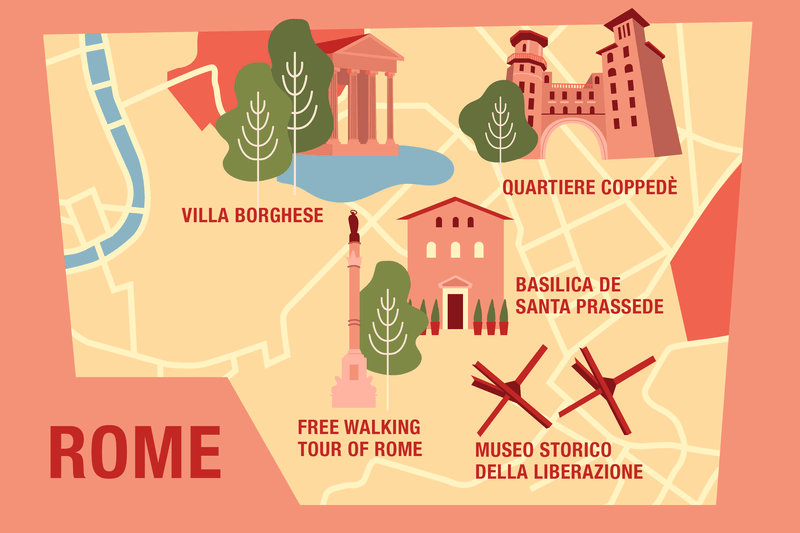
The best way to learn about the city’s most famous sights is to do a free Rome walking tour. Tours last two hours and run twice a day every day, but tours fill quickly so booking in advance is key. In addition to free Rome tours, you can also eat like a Roman on a food tour.
Free Historic Churches in Rome (Basilica di Santa Prassede)
For a bit of old world charm, discover the 9th-century Basilica di Santa Prassede, one of the most interesting Roman church you’ve never heard of. The church is dedicated to Saint Praxedes, who, according to tradition, protected persecuted Christians and buried those she could not save in a well located in the nave. While there, you’ll see a wealth of beautiful Byzantine mosaics and even what is claimed to be a fragment of the column to which Christ was tied before he was scourged.
Hidden Neighborhoods in Rome (Quartiere Coppedè)
The Quartiere Coppedè, designed by Florentine architect Gino Coppedè, this whimsical neighborhood is one of Rome’s best-kept secrets. With a fantastical mix of sculpture, Tuscan turrets, gargoyles, frescoes, and gardens, there’s something interesting to see around every corner.
Also read:
• Tips for Planning a Trip to Italy
• Eating in Italy: The Best Food and Where to Find It
• Top 6 Things to do on Your Amalfi Coast Vacation
Free Parks in Rome (Villa Borghese)
Rome’s most beautiful park, Villa Borghese, is a must-visit free attraction. With museums, landscaped gardens, and lakes spread over 150 acres, you might want to bring a picnic and be ready to soak in the atmosphere.
Free Museums in Rome
Visit Museo Storico della Liberazione to uncover modern history. As the former headquarters of the SS during the Nazi occupation, Rome's history offers visitors a chilling yet profound experience. The museum exhibition includes artifacts that document the Resistance including the 1944 Ardeatine massacre. Graffiti created by members of the Resistance is still visible in the cells where they were imprisoned.
Why Travel Protection Matters for Rome Trips
From simple language barriers to more serious issues like a lost passport or twisted ankle, travelers should be prepared for the unexpected and a travel protection plan may help with that. The feeling of being helpless is common for travelers when things go wrong, but these feelings are magnified when you are thousands of miles from home and may be unable to communicate effectively with the locas.
Travel protection plans from Generali Global Assistance include a variety of assistance services that may help you travel with more peace of mind, including Interpretation/Translation and Medical Referral, which may help you find local, qualified doctors who speak your language if all conditions of your plan are met.
With so much at stake, such as the financial investment of a European vacation, international travelers should be sure to purchase a travel protection plan with Trip Cancellation and Trip Interruption coverages.
Rather than asking whether European vacation destinations warrant travel protection plans, you might want to consider the possible costs of certain unexpected issues if you don’t have coverage. After all, a free walking tour can suddenly become costly if you need medical attention or get pickpocketed and don’t have travel protection that can help reimburse you and help you get through a stressful time.
Also read: Why Travel Insurance is a Smart Decision for a European Vacation
Travel Resources
See All
Average Customer Rating:

Thank you for visiting csatravelprotection.com