Faroe Islands: Breathtaking Cliffs, Adorable Puffins, and Untouched Nordic Landscapes
Key Takeaways
- The Faroe Islands offer some of the most dramatic coastal scenery in the North Atlantic, defined by towering sea cliffs, deep fjords, and rapidly shifting weather.
- Puffins and other seabirds shape the islands’ wildlife identity, with Mykines standing out as one of the most important nesting areas.
- Faroese culture, geography, and ancestry reflect centuries of Nordic and Norse traditions, making the destination especially meaningful for heritage-minded travelers.
Rising from the cold waters of the North Atlantic between Iceland and Scotland, the Faroe Islands feel carved by wind, water, and time. This remote archipelago of 18 volcanic islands belongs to the Kingdom of Denmark yet maintains a distinct cultural and geographic identity shaped by isolation, the sea, and a deep relationship with nature. Travelers drawn to dramatic cliffs, seabirds circling above the ocean, and landscapes largely untouched by mass tourism often describe the Faroe Islands as one of Europe’s last truly wild destinations.
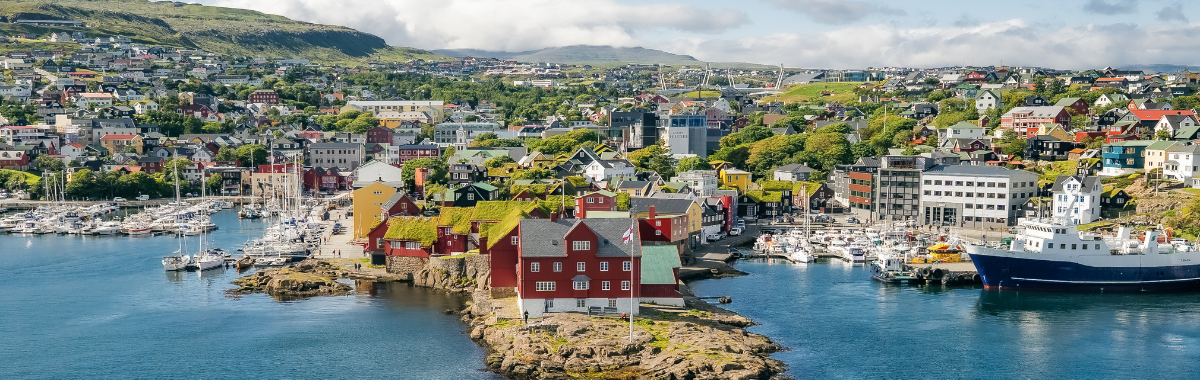
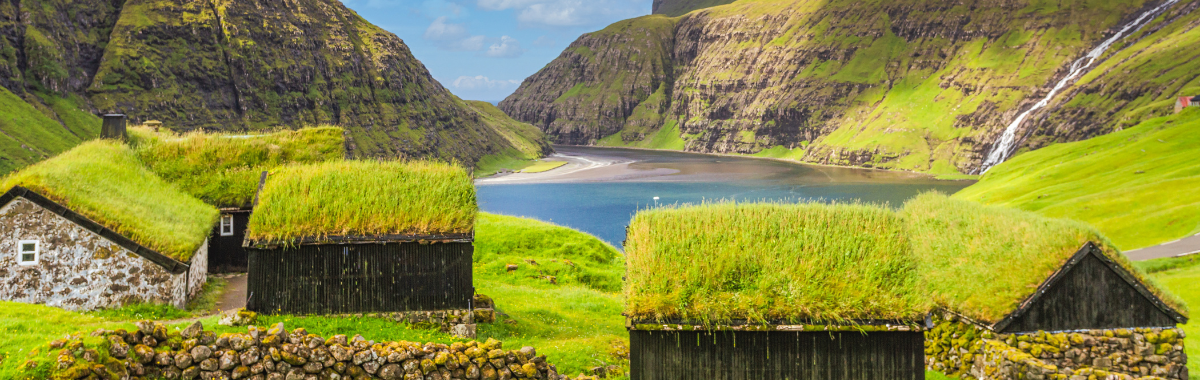
The Faroes are defined by contrasts. Emerald-green hills drop suddenly into churning Atlantic waves. Waterfalls spill directly into the sea. Small turf-roofed villages cling to fjords beneath cloud-wrapped mountains. Weather shifts quickly, transforming views minute by minute. These elements together create a destination that rewards patience, curiosity, and respect for the natural world.
Where the Faroe Islands Are Located?
The Faroe Islands sit in the Northeast Atlantic Ocean, roughly halfway between Iceland and Norway and north of Scotland. Despite their remote position, the islands maintain regular air and sea connections with mainland Europe. The archipelago covers approximately 1,399 square kilometers and includes 18 main islands, most of which are inhabited.
Geologically, the islands formed from volcanic basalt millions of years ago. This origin explains the layered cliffs and steep mountains that dominate the skyline. No point in the Faroe Islands lies far from the ocean, and the sea influences everything from weather patterns to daily life.
A Landscape Shaped by Wind and Water
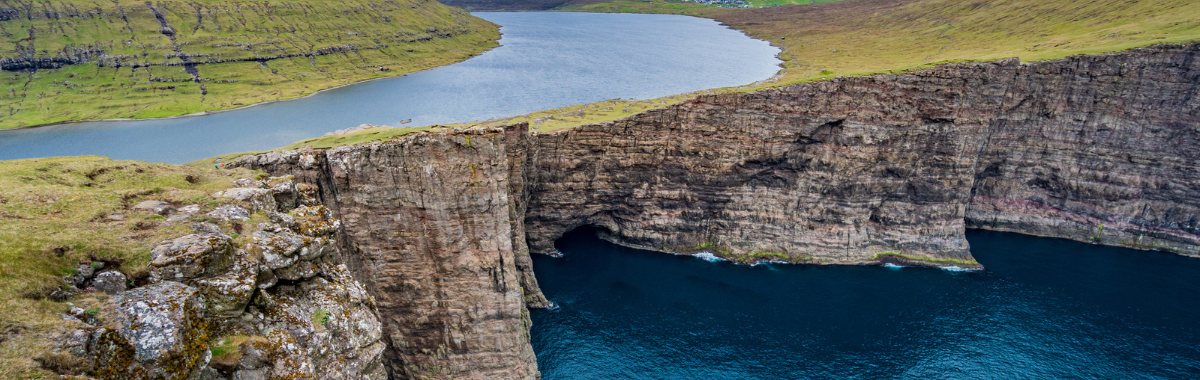
Dramatic cliffs remain the defining visual feature of the Faroe Islands. Some rise more than 700 meters above sea level, plunging straight into the Atlantic. Locations such as Vestmanna, Trælanípa, and the northern coastlines of Eysturoy reveal sheer rock faces streaked with waterfalls and sea spray.
Unlike destinations shaped by trees or deserts, the Faroese landscape remains largely treeless due to constant winds and cool temperatures. Instead, grass, moss, and heather dominate, producing an almost luminous green that contrasts with dark rock and gray skies. This treeless terrain enhances sweeping views, making even short walks feel expansive and cinematic.
Waterfalls represent another defining feature. Múlafossur near the village of Gásadalur ranks among the most photographed sights in the islands, cascading from a cliff directly into the ocean. Heavy rainfall and steep terrain support countless other falls, many unnamed, that appear along roadsides and hiking routes.
The Ever-Changing Faroese Weather
Weather in the Faroe Islands plays an active role in the travel experience. Influenced by the North Atlantic Current, the climate remains relatively mild for such a northern latitude, yet conditions change quickly. Fog, rain, sunshine, and strong winds often appear within the same day.
Locals often refer to the Faroes as “the Land of Maybe,” a nickname reflecting this unpredictability. Cloud cover drifts low across mountains, revealing and concealing landscapes in cycles. For photographers and hikers, this shifting atmosphere adds depth and drama rather than inconvenience.
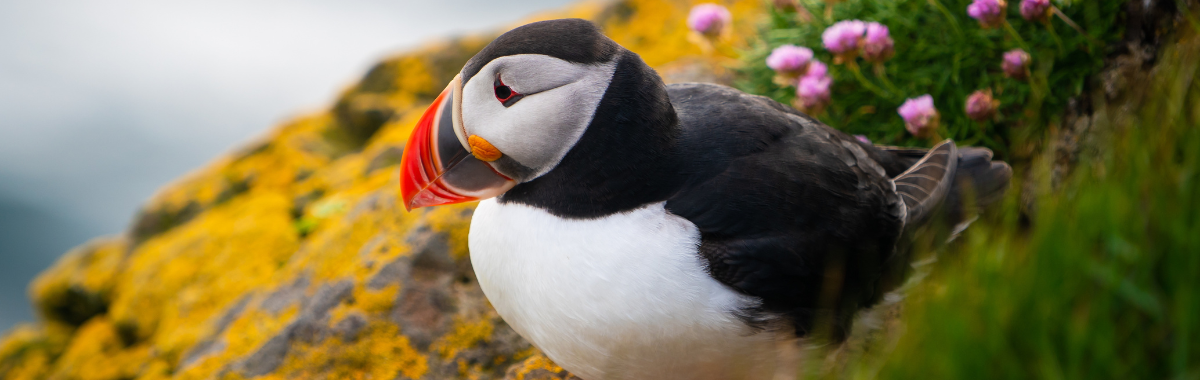
Puffins and Seabird Life
Few images symbolize the Faroe Islands more strongly than puffins perched on grassy cliffs above the sea. These colorful seabirds nest in burrows during the warmer months, returning from the open ocean to raise chicks. The Faroe Islands support one of the largest puffin populations in the North Atlantic.
Mykines, the westernmost island in the archipelago, stands out as the premier puffin-watching location. During summer, thousands of birds gather along its cliffs near the lighthouse at Mykineshólmur. Vestmanna’s sea cliffs, accessible by boat, also host puffins alongside guillemots, fulmars, and kittiwakes.
Puffins typically arrive in late spring and depart toward the end of summer. Their presence adds movement and sound to the cliffs, turning coastal walks into wildlife encounters.
Hiking and Exploring the Cliffs
Hiking serves as one of the most immersive ways to experience the Faroe Islands. Trails range from gentle village-to-village routes to steep climbs along cliff edges. Many paths follow historic walking routes once used for travel between settlements before roads and tunnels existed.
Trælanípa, often called the “lake above the ocean,” illustrates the optical illusion created by perspective and elevation. Sørvágsvatn appears suspended above the sea when viewed from certain angles, with cliffs dropping dramatically beyond the lake’s edge. This hike highlights how geology and perception intertwine in the Faroes.
Hiking culture in the islands emphasizes respect for landowners and safety awareness. Much of the land remains privately owned, and access arrangements reflect cooperation between visitors and local farmers. Weather awareness and appropriate preparation play an important role due to exposed terrain and rapidly changing conditions.
Also Read: 9 of the Best Hiking Trips in the U.S. and How to Find Trails Near You
Faroese Culture and Nordic Heritage
The Faroe Islands’ cultural identity reflects a blend of Norse roots and local evolution. The Faroese language descends from Old Norse, preserving linguistic connections to Viking settlers who arrived more than a thousand years ago. Traditional chain dancing, ballads, and festivals continue to play a role in community life.
For travelers interested in personal heritage, the Faroes hold special appeal. Surnames, place names, and family histories often trace back centuries within the islands due to their relative isolation. This connection between landscape and lineage resonates strongly with those exploring ancestral ties.
Also Read: Exploring the Places That Shaped Your Family Story
Cuisine Influenced by Environment
Faroese cuisine reflects the islands’ environment and historical preservation methods. Seafood dominates menus, including cod, haddock, and shellfish harvested from surrounding waters. Lamb features prominently as well, reflecting the importance of sheep farming.
Traditional dishes sometimes involve fermentation or air-drying, techniques developed before modern refrigeration. Contemporary Faroese chefs reinterpret these methods with modern presentation, particularly in Tórshavn’s growing restaurant scene. Dining experiences often emphasize local sourcing and seasonal availability.
Also Read: Traveling with Dietary Restrictions

Why the Faroe Islands Leave a Lasting Impression
What sets the Faroe Islands apart lies not only in dramatic scenery but in the sense of space and authenticity that remains rare in modern travel. The absence of crowds, the closeness to wildlife, and the visible relationship between people and landscape combine to create a destination that feels grounded and genuine.
Visitors often leave with a heightened awareness of nature’s scale and unpredictability. Cliffs disappearing into fog, puffins lifting from the grass, and villages resting quietly beneath mountains remain lasting images long after the journey ends.
Planning the Journey Ahead
A trip to the Faroe Islands blends exploration, reflection, and discovery. Whether the focus lies on landscapes, wildlife, cultural heritage, or ancestral connections, the islands offer depth beyond their small size. Thoughtful planning, seasonal awareness, and flexible expectations help shape meaningful experiences in this North Atlantic archipelago.
Get a fast and free travel protection quote today and start planning the Faroe Islands journey with confidence.
Travel Resources
See All

10872502605

Average Customer Rating:

Thank you for visiting csatravelprotection.com