Camping Tips For Camping Trips: The Must-Knows and Must-Dos
Key Takeaways
- Camping remains one of the most flexible and cost-effective ways to travel, especially for first-time or budget-conscious travelers.
- Preparation, from waterproofing gear to understanding fire safety, plays a major role in overall comfort and safety.
- For longer or more complex camping trips, travel protection with assistance services can help manage risks tied to cancellations, illness, or emergencies.
In a travel world where everything seems incredibly expensive, isn't it great to know you can still reconnect with nature for a great price or sometimes even free?
Maybe the economy is driving the increased interest in camping, or maybe people want to get closer to nature by disconnecting from screens.
Whatever the reason, camping is experiencing a surge in popularity, and if you’re part of that surge and relatively new to the game, these tips will help you make your first camping trip as enjoyable as possible, even without many of the comforts of home.
Choose: Ground or Above Ground?
When exploring camping, the first decision to make is how you‘re going to camp. The cheapest way is to gather up whatever blankets or mats you have at home and sleep on the literal ground, but we’re going to dismiss that one for reasons such as, no one likes waking up wet, sore, and cold from sleeping on the ground.
The next step up is to invest in a tent, sleeping bag and air mattress and/or sleeping pad. You can find these items on Amazon, eBay, or even secondhand sites like Facebook Marketplace, and after you look at them once you’ll see how complex camping supplies can be.
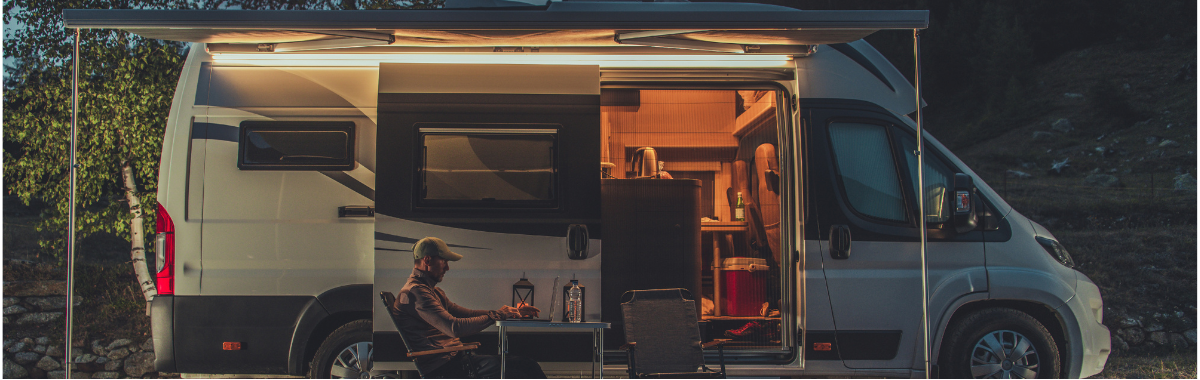
The step-up from here is to get some sort of camping accessories, such as a camp trailer. These can be had for low four figures, not including the purchase of a vehicle suitable for hauling the trailer, a hitch, and related items.
These items also populate Marketplace like ants at a picnic, because there are two glorious days in the life of a trailer owner: the day you buy it and the day you sell it.
For those unsure whether they will like camping, go the tent route, go used and save the big money for the sleeping pad.
Also Read: Epic National Parks Across the United States for Hiking and Camping
Waterproofing Is Everything.
You bought the tent and bag and pad and you’re feeling on top of the world. Swell. You dash to the nearest campground, set up everything, crawl into your cozy sleeping bags … and it rains that night, so much so that it ruins your gear or gets you sick.
Tents are not born 100% waterproof. They have to be made 100% waterproof. Here’s how you do that:
- Don’t pitch your tent in a declination (or downhill from a rain runoff). You want water running away from your tent, not into it.
- Put a tarpaulin underneath your tent to the exact dimensions of the floor of your tent. Do not let it hang out past the edge of the tent and do not come up short.
- Let nothing inside your tent rest against the tent walls.
- If your tent has a rain fly (an extra square of fabric that’s stretched above your tent), use it. Tie it securely and make sure water drains off the fly away from your tent. The same applies to any tent material you have above the entrance to your tent.
- Bring in shoes and any other items you don’t want soaked. Put clean socks and underwear inside bags.
Camping is fun if you’re not drenched. If you’re drenched, it’s miserable. So do the work to stay dry.
Also Read: Best Places to Camp in North America You Need to See

Be Smart About Fire.
You’ve watched Survivor; you know when your fire goes out you go home.
Camping is not Survivor. You don’t need a fire going 24/7, but when you need a fire, you really need a fire.
What if you have zero experience starting a fire? Follow these tips:
- Know local regulations regarding transport of firewood. Many locales won’t let you transport firewood across county or state lines, for fear of spreading destructive insects.
- Don’t start fires, even cooking fires, during burn bans.
- Don’t use gas to start a fire. Use matches to light newspaper, use the lit newspaper to light twigs, and use twigs to light larger pieces.
- Fire needs air, so don’t dump on all your firewood the instant you have a flame. Nurture the flame by feeding it oxygen and small burnable materials.
- Only start fires inside fire rings and other designated areas.
- Once your fire’s going, keep it controlled. Don’t set fire to the branches above you or let your fire expand outside the designated area.
- For cooking fires, coals are the thing. Don’t start cooking when the fire is a raging flame; let it calm down and build heat.
- Keep a bucket of water at hand at all times, along with a sturdy stick for stirring coals.
- Make sure your fire is completely out before bedding down for the night.
Aluminum Foil Is Your Kitchen Appliance.
Cooking while camping is stressful for folks who don’t like to go anywhere without their milk frother.
Relax; you’ve got this. You’re now in a place where frothy milk is unfortunately not on the bare-necessities scale. And you can cook in this environment … as long as you have aluminum foil.
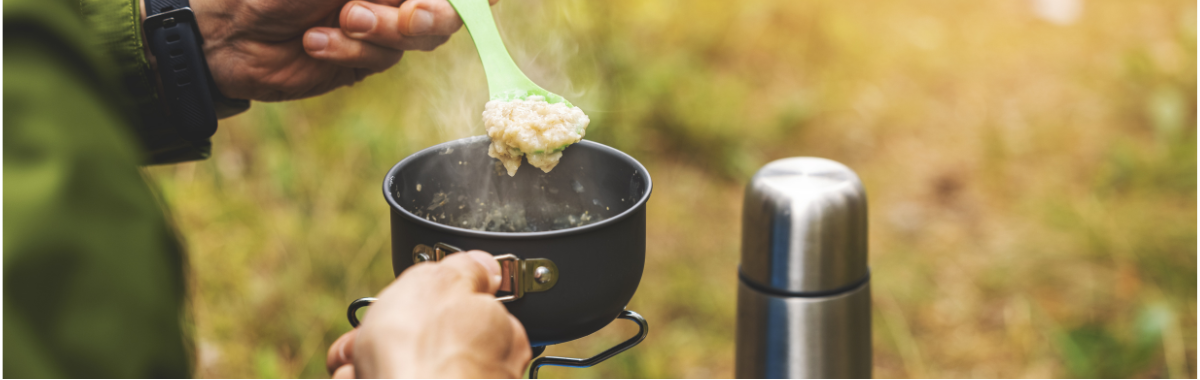
Cooking while camping – cooking anything – is a bone-simple five-step process:
- Get your fire down to coals.
- Wrap whatever you want to cook in aluminum foil.
- Add butter. (To the inside.)
- Toss it in the coals. Give it about 15 minutes.
- Open and eat.
Honestly, that’s all you need to do to cook great meals when you’re camping. Ground beef, diced carrots and potatoes in foil? Absolutely. Swap out chicken or crack an egg in there if you want.
Core out an apple, fill the void with caramels, chocolate chips and marshmallows, and wrap it in foil? You know it.
PBJ in foil? Why not?
About the only thing you don’t want to cook in foil is pancake batter. Buy a cast-iron skillet at a garage sale, cook your bacon first, then drop the pancake batter into the bacon grease.
One last thing about cooking: Store all your coolers in your locked vehicle. Raccoons and other varmints don’t mind helping themselves.
Do a Dry Run.
Before you drive across five states to try out your camping skills, make sure they’re skills. Do a dry run close to home – and by “close to home,” we mean close enough that you can drive there in 10 minutes if you forget the tent stakes.
By doing a dry run you’ll learn so many things. But you’ll also learn the little things to bring that make camping easier like:
- Rope
- A plastic tablecloth
- An oven mitt
- Actual flashlights or headlamps
- Tick repellent
- Rainwear
- More warm clothes than you think you need (mornings are always chilly)
And while you might not need travel protection for that dry run, larger, more involved trips with camp trailers and gear can benefit from travel insurance and assistance services from Generali Global Assistance.
Whether you’re dealing with a camping-reservation cancellation due to a covered reason, fall ill during your trip, or in a worse case need an emergency evacuation/emergency transport, a Generali Global Assistance travel protection plan is designed to help protect it.
Getting a quote is easy. Click here, and have fun camping!
Travel Resources
See All
10872502604

Average Customer Rating:

Thank you for visiting csatravelprotection.com