Exploring Australia: A Practical Guide for First-Time Visitors
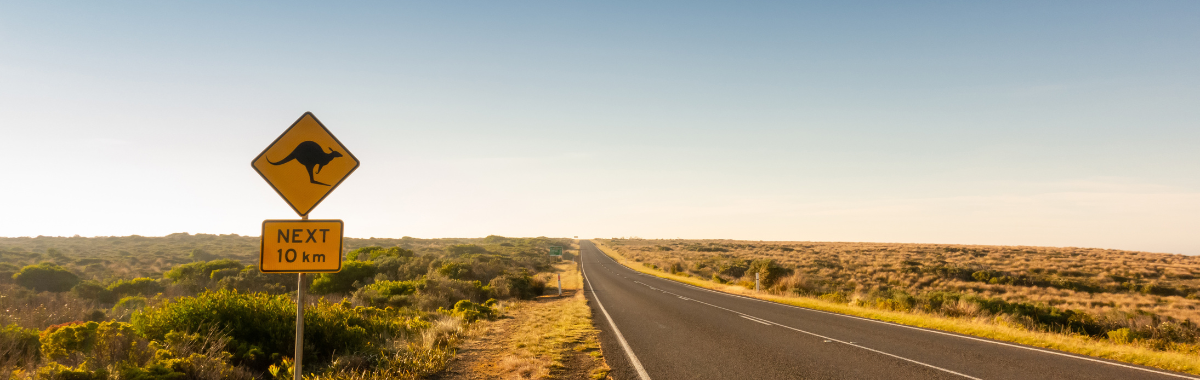
Summary: Discover the real Australia beyond the clichés. From lush rainforests to wild coastlines and unique wildlife, this guide will help you plan a meaningful first trip to the Land Down Under.
Australia is a destination that often defies expectations. While many travelers may feel familiar with it through media and pop culture, the reality of visiting this vast and diverse country is far more complex—and rewarding. From its unique ecosystems and wildlife to its expansive geography and regional contrasts, Australia offers a travel experience that requires thoughtful planning and a flexible itinerary. Understanding the scale and variety of what the country has to offer is essential for making the most of your visit.
Whether you're drawn to the tropical rainforests of the north, the vibrant cities along the coast, or the remote wilderness of Tasmania, Australia presents a wide range of opportunities for exploration. However, due to its size and the distances between key destinations, it’s important to prioritize what you want to see and do. This guide outlines practical tips and regional highlights to help you plan a meaningful first trip—one that balances adventure with accessibility and encourages deeper discovery beyond the typical tourist path.
1. Understand Australia is a continent, and plan accordingly.
Australia is not just a country—it’s a continent. While it may be smaller than other continental landmasses, its geographic scale has a significant impact on travel planning. Distances between destinations can be substantial, and regional climates, ecosystems, and wildlife vary widely. Travelers should approach their itinerary with flexibility and prioritize the areas they most want to explore.
Because of its size and diversity, it’s unlikely that visitors will experience everything Australia has to offer in a single trip. Instead, consider focusing on a few key regions and using this visit as an opportunity to discover where you may want to spend more time in the future. Whether you're interested in coastal cities, national parks, or remote wilderness, thoughtful planning will help ensure a rewarding and manageable travel experience.
2. Comprehend Australia’s geography.
Australia’s geography plays a central role in shaping travel experiences. The country’s coastline is where most of its major cities are located, including Sydney, Brisbane, and Melbourne. These areas offer scenic drives, access to national parks, and opportunities to observe native wildlife. The east coast, in particular, is a popular route for travelers, with diverse ecosystems and well-developed infrastructure that supports tourism by car, cruise, or air.
In contrast, Australia’s interior is largely arid and sparsely populated. While it presents challenges for independent travel due to its remote nature and extreme climate, it also offers unique experiences for those interested in outback landscapes and long-distance rail journeys such as The Ghan. Understanding the geographic layout of the country helps travelers make informed decisions about where to go, how to get there, and what types of activities to prioritize based on regional characteristics.
The country’s geography influences the wildlife you can see, and the activities you should try, but it doesn’t explain everything. For instance:
a. The north is south.
Because Australia is in the Southern Hemisphere, the northern part of the country has most of the tropical climate. In fact, Australia’s northern tip just about touches Papua New Guinea, and a region of dense jungle known for its remarkable biodiversity.
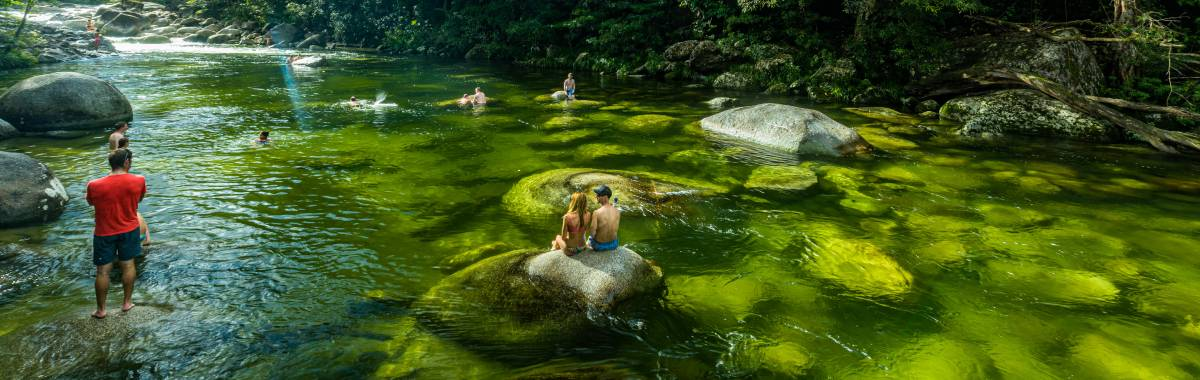
If you visit the Daintree Rainforest or Apudthama National Park, you’d believe you were in the western Amazon, with crocodiles, steamy temps, green frondy forests, savannas, swamps, beaches, and more.
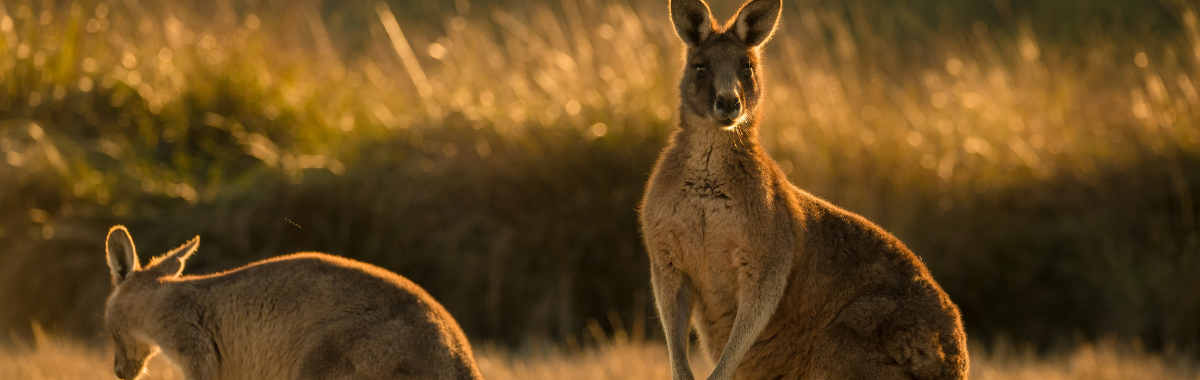
The Daintree is a paradise for wildlife lovers, home to over 430 bird species, more than 3,000 plant species, and countless insects and reptiles. Highlights include uniquely Australian rarities such as the Southern Cassowary (a large, prehistoric‑looking flightless bird) and the Bennett’s Tree Kangaroo, which lives high in the canopy. The rainforest park is a great one-stop shop for wildlife and ecosystems, since the eastern side of the park’s mountains gets most of the precipitation and is lush and tropical, while the western side is drier and more kangaroo-friendly.
Many people – Australians and visitors – grab a rental near the ocean in this region, or camp in the parks and explore.
Because of the extreme ecosystem, it’s best to hook up with a tour company (or several) for specific expeditions into the parks. You can always come back on your own later.
Also Read: Insurance for Rental Car Damage: Where to Get it and Things to Know
b. The east is west.
Well, sort of. When we think of a lush coast and a dry interior, we’re more likely to picture a lush west coast (i.e., Washington, Oregon and California) and an arid interior to the east. In Australia, it’s reversed.
For that reason, once you leave the northern rainforests you’ll likely stick to the east coast for your exploring. That’s where you’ll find Brisbane and Sydney, in addition to smaller cities and towns that encourage more traditional tourism.
You’re actually not out of the rainforests, though some of their characteristics change. For instance, Barrington Tops National Park offers snow to go along with its rainforests.
The further south you go, the more likely you are to see uniquely Australian wildlife such as koalas and platypuses. A prime viewing spot for them is Otways, a scant two and a half hours from Melbourne on the Great Ocean Road.
Stay in Melbourne, drive the equivalent of Cleveland to Columbus but on a highway that hugs the ocean and you’ll end up with the chance to see koalas and platypuses at the end of your journey.?
c. The wild island is on the bottom.
The Otways region is about as close as mainland Australia gets to Tasmania, an island off the continent’s southernmost tip.
Think of Tasmania as Australia’s upside-down equivalent of Kauai, Hawaii’s northernmost island.
Tasmania’s capital city, Hobart, is the main entry point for visitors — a small but vibrant city surrounded by lush greenery. If you want to see what the Australian version of the end of the world looks like, Southwest National Park is your place. It’s delightfully wild, and home to parrots, wombats, quolls, pademelons (small wallabies), platypuses, and more.
There’s never a guarantee you’ll see these creatures, but you for sure won’t see them back in Topeka.
If you’re interested in hiking and wildlife, Tasmania is your place. Actually, most of Australia is your place, which leads to the last misconception about Australia.
3. The Best Things To Do In Australia Are Hit The Cities And Kick Back On The Beaches.
No, they’re not! Australia is a country where adventure goes far beyond Patagonia jackets and Helly‑Hansen gear. You can go to the beach in Australia, but if you’re just going to Australia to hit the beaches, go to the Outer Banks or Southern California. Much cheaper, same sand, same box jellyfish.
And while the cities are delightful – clean, safe, cool architecture, good food – there’s little that you can’t get more inexpensively closer to home.
Besides, it’s not like Qantas lands in the middle of the outback. You’ll get a chance to see Sydney on your way in and out of the country, and you’ll probably see Melbourne if you go to Tasmania or Otways.
No, the thing to do is get out and explore the country – by foot if possible, though there are many wonderful excursion operators who will take you to where the wild things are in relative comfort.
Given that, here’s the how to plan a first trip to Australia:
- Limit time in the cities. Couple days in Sydney and a day and a half in Melbourne should do it. Adelaide and Perth are optional, at least for your first time through.
- Rent a car or take a bus along the coast, stop when you see nature or a small town that interests you, and wander. Give yourself at least a couple of days for this.
- Plan plenty of park time. Give serious consideration to Daintree, Otways, Barrington Tops, and Southwest, among others.
- Use this trip as a fact‑finding tour to decide where you’d like to spend more time in the future. Yes, getting to Australia can be challenging in more ways than one, but once you’re there, costs are comparable to those in other modern international destinations.
A trip to Australia is big, and for that reason you’ll want to help protect it with travel protection from Generali Global Assistance. Our plans are designed to assist you more than halfway around the world.
See for yourself. Get a quote today.
Travel Resources
See All

8456512512

Average Customer Rating:

Thank you for visiting csatravelprotection.com