Algeria: Discovering North Africa’s Undiscovered Destination
Key Takeaways
- Algeria offers Roman ruins, Mediterranean cities, mountain landscapes, historic markets, and Sahara scenery in one of North Africa’s largest and least-crowded destinations.
- Top cultural highlights include UNESCO-recognized sites such as Timgad, Djémila, the M’Zab Valley, the Kasbah of Algiers, and Tassili n’Ajjer.
- Travelers should review current safety guidance before planning an Algeria trip, especially for border regions and Sahara travel, and consider travel protection with assistance services before departure.
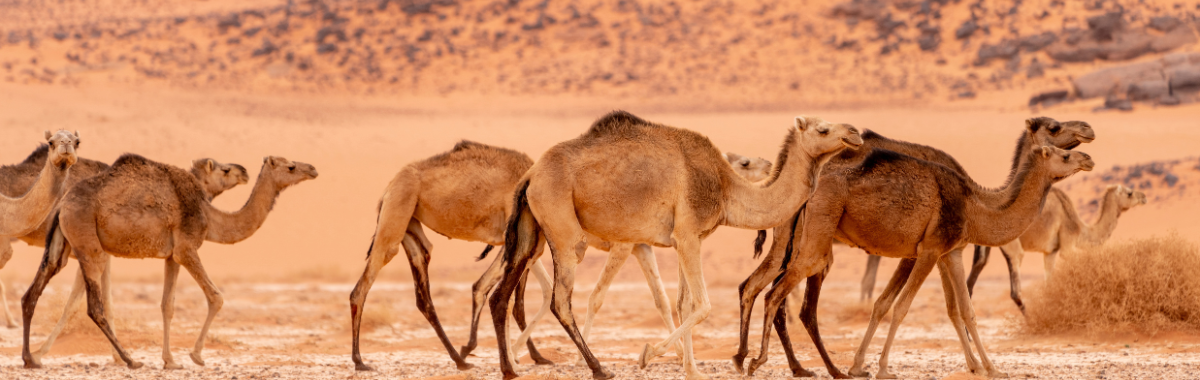
Algeria has long been one of North Africa’s most intriguing destinations, yet it remains far less familiar to many U.S. travelers than Morocco, Egypt, or Tunisia. That lower profile is part of the appeal. Algeria offers ancient Roman cities, Mediterranean ports, desert landscapes, Amazigh cultural traditions, Ottoman-era architecture, French colonial history, and some of the Sahara’s most memorable scenery.
It is also a destination that rewards preparation. Algeria is vast, and travel logistics may require additional planning, and some regions call for extra caution. For travelers who enjoy culturally rich places with fewer crowds, Algeria offers a memorable mix of history, architecture, landscape, and atmosphere.
Algeria is the largest country in Africa by land area, with the World Factbook listing its total area at 2,381,740 square kilometers. Its geography stretches from the Mediterranean coastline deep into the Sahara, creating a dramatic contrast between coastal cities, mountain regions, oasis settlements, and desert plateaus. The same source lists Algeria’s population at more than 47 million people in 2025 estimates, with much of the population concentrated in the northern part of the country near the coast. Algeria Country Profile from The World Factbook
Algeria’s cultural identity reflects centuries of Amazigh, Arab, Ottoman, French, Mediterranean, and Saharan influences. Arabic and Tamazight are both official languages, while French remains widely used in business, education, media, and travel settings. This layered identity helps explain why Algeria does not feel like a single-dimension destination. It is Mediterranean and Saharan, ancient and modern, urban and remote, familiar in some ways and surprising in many others.
For many travelers, Algeria is easiest to understand through three major travel lenses: Roman Algeria, Casbah Algeria, and Saharan Algeria. Each one offers a different way to experience the country.
Roman Algeria
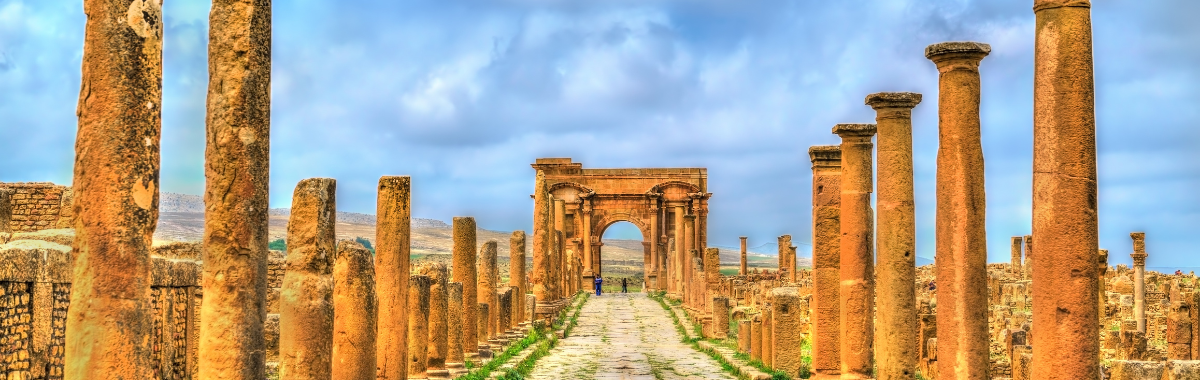
North Africa played an important role in the Roman world, and Algeria has some of the region’s most impressive archaeological sites. Travelers interested in ancient history should place Timgad, Djémila, and Tipasa high on their itinerary.
Timgad is one of Algeria’s best-known Roman sites and is recognized by UNESCO as a World Heritage Site. Founded as a Roman military colony under Emperor Trajan, Timgad is especially valued for its grid-style town plan, which gives visitors a clear view of how Roman urban design worked in North Africa. The site includes streets, arches, temples, a theater, baths, and public spaces that reveal the scale and organization of the city.
Djémila, also a UNESCO World Heritage Site, offers a different setting. UNESCO describes Djémila, also known as Cuicul, as a Roman town situated 900 meters above sea level, with forums, temples, basilicas, triumphal arches, and houses adapted to a mountain location. Its hillside location gives the ruins a distinctive atmosphere, and the surrounding landscape adds to the sense of discovery.
Tipasa, west of Algiers, combines Roman ruins with a Mediterranean coastal setting. Its archaeological remains include traces of Punic, Roman, early Christian, and Byzantine history. For travelers who want history paired with sea views, Tipasa offers a strong introduction to Algeria’s coastal heritage.
These sites help explain why Algeria deserves more attention from travelers who appreciate ancient history. Unlike better-known Roman destinations in Europe, Algeria’s Roman ruins often feel spacious and relatively uncrowded. Visitors may find themselves walking through theaters, forums, and stone streets with more room to pause and take in the details.
A successful Roman Algeria itinerary should allow enough time between sites. Distances may be longer than they appear on a map, and road travel often requires patience. Hiring a knowledgeable local guide or working with a travel professional familiar with Algeria may help travelers understand the historical context and manage logistics more smoothly.
What to See at Timgad
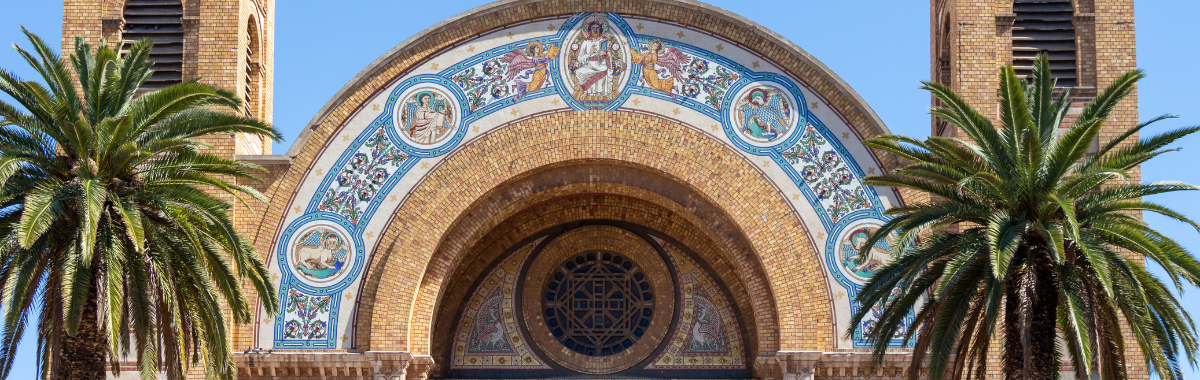
Timgad is often described as one of the clearest examples of Roman town planning in North Africa. Its gridded streets, public buildings, triumphal arch, and theater create an accessible open-air history lesson.
A visit to Timgad should include time to walk the main streets slowly. The layout reveals how Roman planners organized civic space, trade, entertainment, religion, and daily life. The theater is one of the most visually impressive parts of the site, while the remains of the library and baths add more detail to the story of the city.
The Arch of Trajan is one of Timgad’s most recognizable landmarks. It also makes the site visually memorable, standing against the surrounding landscape and giving travelers a strong sense of scale.
Visitors should bring sun protection, water, and comfortable walking shoes. Many parts of the site are exposed, and the stone surfaces may be uneven.
What to See at Djémila
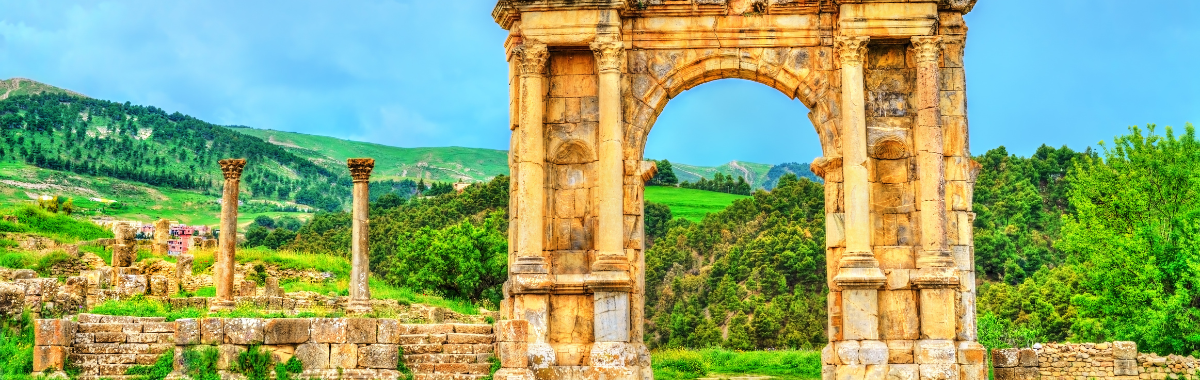
Djémila has a more dramatic topographic setting than Timgad. Because UNESCO notes that the Roman town plan was adapted to a mountain location, visitors get to see how Roman urban design shifted to fit the terrain. UNESCO listing for Djémila
The forum, temples, basilicas, arches, and houses make Djémila especially rewarding for travelers who enjoy architectural variety. The ruins appear across different elevations, creating strong sightlines and photo opportunities.
Djémila also has a museum with mosaics and archaeological finds. Travelers with limited time should still make space for the museum because it adds color, detail, and human scale to the stone ruins outside.
What to See at Tipasa
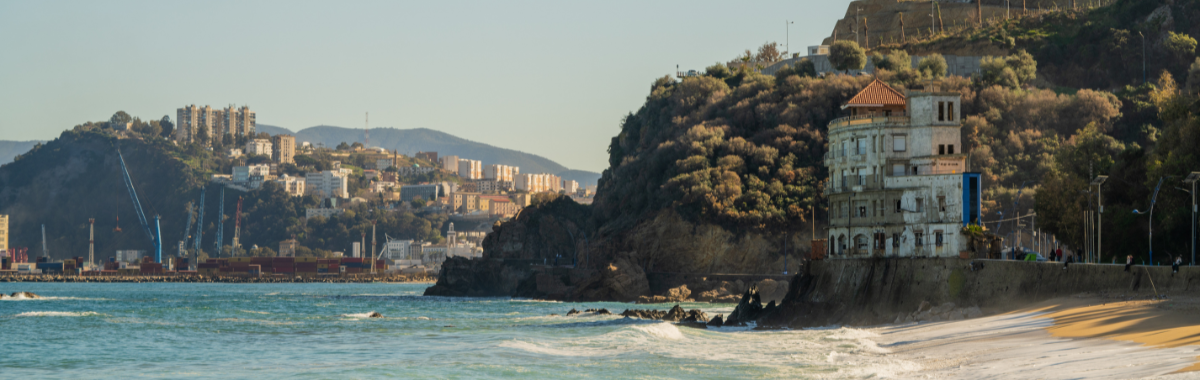
Tipasa offers a more coastal view of Algeria’s ancient past. The ruins sit near the Mediterranean, giving the site a different character from inland Timgad and Djémila.
Because Tipasa includes layers of Punic, Roman, early Christian, and Byzantine history, it works well for travelers who want a broader view of Mediterranean civilization. The setting also pairs well with a day trip from Algiers, depending on itinerary timing and local travel arrangements.
Tipasa is a strong option for travelers who want ancient history without committing to a long inland journey. It also gives a useful contrast to the capital, since the site’s coastal remains are very different from the dense urban atmosphere of Algiers.
Kasbah Algeria
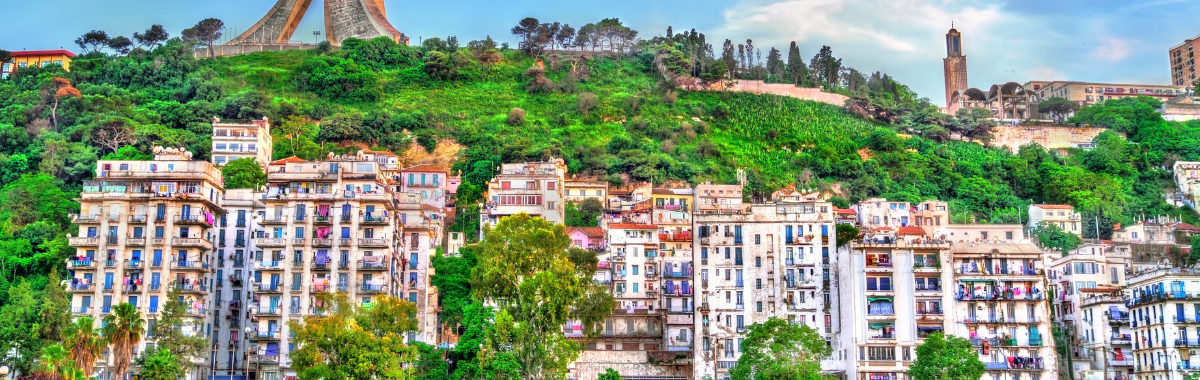
Algiers is the heart of modern Algeria and one of the most compelling cities in North Africa. The capital rises above the Mediterranean in layers: waterfront boulevards, colonial-era buildings, hillside neighborhoods, and the historic Kasbah of Algiers.
The Kasbah of Algiers is a UNESCO World Heritage Site and one of the city’s most important historic districts. UNESCO describes it as a traditional human settlement with palaces, mosques, and urban fabric tied to the old city.
Travelers should approach the Kasbah with respect and preparation. It is a living neighborhood, not only a historic attraction. A local guide is strongly recommended, both for navigation and cultural context. The narrow streets, stairways, courtyards, markets, and historic buildings are best understood through someone who knows the district.
Algiers also offers French colonial-era architecture, seafront views, museums, cafés, mosques, churches, and monuments. For many travelers, the city is the practical arrival point and the cultural introduction to Algeria.

How to Experience Algiers
Start with the city’s layers. Algiers is not a place to rush. Its neighborhoods reveal different chapters of Algerian history, from Ottoman-era streets to French colonial boulevards to modern civic spaces.
The Kasbah should be visited with a guide. Beyond the architecture itself, the district carries deep cultural and historical meaning. Travelers who want context on Algeria’s independence struggle may also want to learn about key sites and museums in the capital before visiting.
The city’s waterfront offers another perspective. Algiers has a dramatic setting on the Bay of Algiers, and its hillside layout creates memorable views over the sea.
Travelers should also make time for museums. Depending on interests, options may include art, archaeology, national history, and cultural heritage. Museum schedules may vary, so it is worth checking hours before visiting.
Also Read: Top Safari Destinations Worldwide
Markets, Architecture, and Daily Life
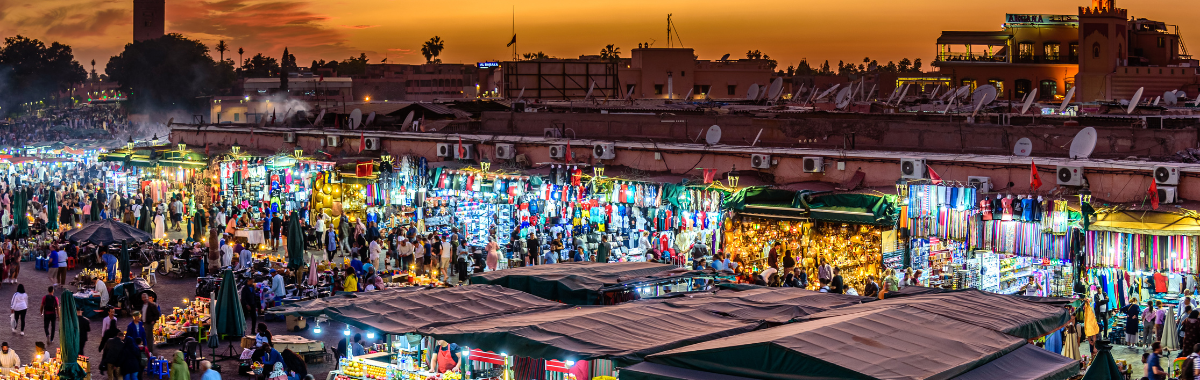
Algeria’s cities offer some of the country’s richest travel experiences. Markets, squares, cafés, mosques, churches, and colonial-era streets all help travelers understand the rhythm of daily life.
Constantine is one of Algeria’s most visually distinctive cities, known for its dramatic bridges and ravine setting. Tlemcen is valued for its Islamic architecture and historical importance. Oran has a strong Mediterranean character and a different cultural energy from Algiers. Ghardaïa, in the M’Zab Valley, offers a completely different environment, architecture, and urban tradition.
The M’Zab Valley is a UNESCO World Heritage Site. UNESCO describes it as a traditional human habitat created in the 10th century by the Ibadites around five fortified towns, with simple and functional architecture adapted to the environment.
Because the M’Zab Valley is a living cultural landscape, travelers should plan visits respectfully. A local guide may help with etiquette, architecture, history, and access. Photography rules, dress expectations, and neighborhood customs should be followed closely.
Tassili n’Ajjer and Algeria’s Rock Art
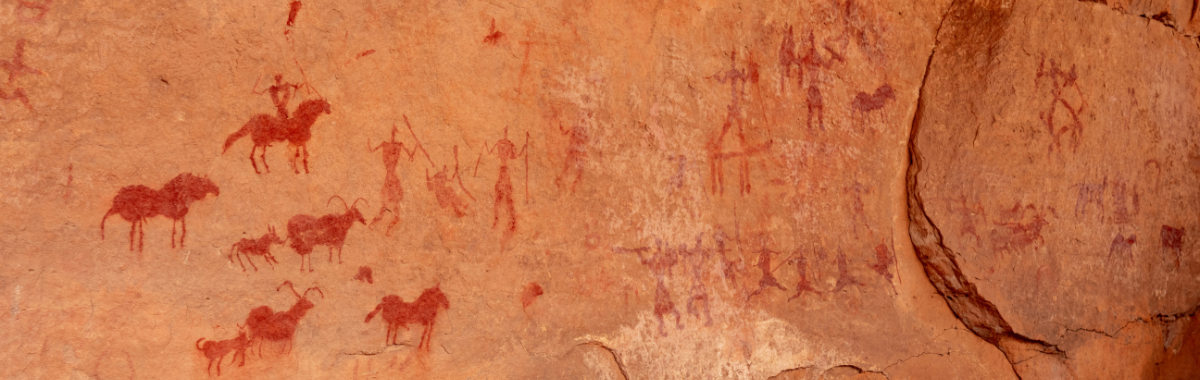
Tassili n’Ajjer is one of the world’s great rock art destinations. Rather than viewing the Sahara only as an empty desert, this site shows evidence of older landscapes, wildlife patterns, and human communities.
The rock art includes depictions from different periods, and the images help illustrate environmental and cultural shifts over thousands of years. For travelers, the experience is not only visual. It is also a reminder that the Sahara has changed dramatically over time.
Visiting Tassili n’Ajjer generally requires specialized planning, internal flights, local operators, permits, and guides. Travelers should work only with reputable professionals and should review government travel guidance before making arrangements.
Also Read: Travel Insurance & Assistance Services for an African Safari
Ghardaïa and the M’Zab Valley
Ghardaïa is one of the best-known towns in the M’Zab Valley and a major gateway to the region. The valley’s fortified towns, architecture, and settlement patterns make it one of Algeria’s most distinctive cultural landscapes.
UNESCO’s description of the M’Zab Valley highlights architecture that is simple, functional, and adapted to the environment. That makes the region especially interesting for travelers who enjoy architecture, urban design, and cultural history.

When to Visit Algeria
Northern Algeria has a Mediterranean climate, with hot summers and milder winters. Spring and fall are often the most comfortable seasons for city travel, Roman ruins, and coastal exploration.
Summer heat may be intense, especially inland and in the desert. Travelers planning Roman sites should account for sun exposure at places like Timgad and Djémila, where shade may be limited.
Sahara travel is usually more comfortable outside the hottest months. Desert conditions vary by region, altitude, and itinerary, so travelers should consult a qualified local operator before choosing dates.
Ramadan may affect opening hours, restaurant schedules, transportation rhythms, and daily routines. Some travelers enjoy experiencing the cultural atmosphere of Ramadan, while others may prefer dates with more predictable tourism logistics.
Also Read: Summer Heat & Health Abroad
Why Travel Protection Matters for an Algeria Trip
Algeria’s combination of long travel distances, regional safety considerations, international flights, guided excursions, and potential itinerary complexity makes travel protection worth considering early in the planning process.
Generali Global Assistance travel protection plans are designed to help with covered situations that affect a trip before or during travel. Depending on the plan selected and the applicable terms, benefits include Trip Cancellation, Trip Interruption, Travel Delay, Baggage Delay, Emergency Assistance and Transportation, and other benefits listed in the Plan Documents.
Assistance services may be especially valuable for an international trip where language, local logistics, and emergency coordination may be more challenging. These services may help connect travelers with support resources while away from home, subject to the terms of the plan.
Final Recommendations for Algeria
Algeria is one of North Africa’s most layered destinations. Its Roman ruins, historic cities, Mediterranean coastline, mountain settings, oasis towns, and Sahara landscapes create a wide-ranging travel experience.
A well-planned Algeria trip should focus on realistic routing. The country is large, and trying to see everything in one visit may lead to rushed travel days. Choosing one or two major themes, such as Roman history and Algiers, or Algiers and the M’Zab Valley, often creates a better trip.
Travelers should also stay current on safety guidance. Before booking, review the U.S. Department of State travel advisory, check health recommendations, and work with reputable travel professionals who understand Algeria.
For those who prepare carefully, Algeria offers a rare sense of discovery. It is not simply an alternative to better-known North African destinations. It stands on its own as a country with remarkable history, architecture, landscapes, and cultural depth.
If Algeria is on the travel list, consider helping to protect the trip with travel protection and assistance services from Generali Global Assistance. Get a fast and free quote today and see plan options for an upcoming Algeria trip.
FAQs About Traveling to Algeria
Is Algeria good for travelers interested in history?
Yes. Algeria is especially strong for travelers interested in ancient history, Roman ruins, Islamic architecture, Ottoman-era neighborhoods, colonial-era streets, and prehistoric rock art. UNESCO-recognized sites such as Timgad, Djémila, Tipasa, the Kasbah of Algiers, the M’Zab Valley, and Tassili n’Ajjer make the country a standout destination for cultural travel.
What are the best places to visit in Algeria?
Top places to consider include Algiers, the Kasbah of Algiers, Tipasa, Timgad, Djémila, Constantine, Oran, Tlemcen, Ghardaïa, the M’Zab Valley, and Tassili n’Ajjer. The right itinerary depends on trip length, interests, season, and current travel guidance.
Is Sahara travel in Algeria safe?
Travelers should review the latest government guidance before planning Sahara travel. The U.S. Department of State advises against overland travel in the Sahara Desert due to terrorism and kidnapping and recommends air travel where possible, reputable travel agents, and careful emergency planning for those visiting Algeria. Conditions may change, so check the advisory before booking and again before departure.
Should travelers buy travel protection for Algeria?
Travel protection is worth considering for an Algeria trip because international flights, guided arrangements, domestic transportation, medical coordination, delays, and itinerary changes may involve significant costs. Depending on the plan and the covered reason, benefits may help with Trip Cancellation, Trip Interruption, Travel Delay, Baggage Delay, Emergency Assistance and Transportation, and other listed benefits. Review the plan documents to understand benefits, limits, and exclusions before purchase.
Travel Resources
See All

10872502608

Average Customer Rating:

Thank you for visiting csatravelprotection.com